




2026/09/24
Jiangsu Tair continues to undertake the drafting work of national standards
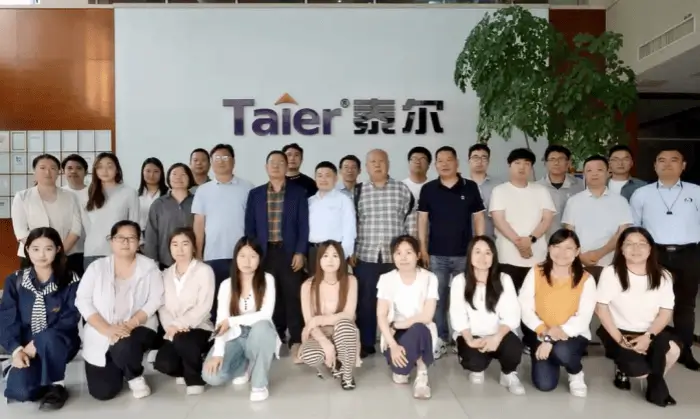
Recently, the State Administration for Market Regulation and the Standardization Administration of China officially approved and released the standard Petroleum Jelly for Capacitors (Standard No.: GB/T 6733-2025). This national standard, which has attracted much attention in the industry, was proposed and managed by the National Technical Committee on Standardization of Petroleum Products and Lubricants, and was revised under the leadership of Jiangsu Taier Novel Material Co., Ltd.
Background and Urgency of Revision
The market is huge and has far-reaching impact: China's capacitor market accounts for as much as 71% of the global market size (approximately RMB 110.2 billion in 2019). Power capacitors are used in power distribution networks and industrial reactive power compensation, which are crucial for ensuring grid stability and improving energy efficiency.
Energy conservation and emission reduction are driven by practical realities: Industrial electricity consumption accounts for 67.5% of total social electricity consumption. A low power factor leads to significant energy waste, increased electricity costs, and environmental burden. Capacitor aging is the main cause of power factor decline, and its performance is directly related to the encapsulation material.
Material is critical, standards are outdated: Vaseline, as a solid impregnating compound, has excellent electrical properties and stability. However, the current GB/T 6733-1986 standard has been in effect for over 30 years, and many technical indicators (such as the test temperature for volume resistivity being out of sync with actual operating conditions) are outdated and cannot effectively distinguish between superior and inferior products or ensure quality. Therefore, revision is urgently needed.
Major Technological Changes and Upgrades in the New Standard
This revision has made multifaceted and structured optimizations and upgrades to the old standard, with the main technical differences being:
Scientific classification: Vaseline capacitors are divided into three grades: No. 1, No. 2 and No. 3, to adapt to different application scenarios and promote the refinement of products.
Indicators optimized to better reflect reality:
Key performance improvements: The technical requirements for volume resistivity have been changed to better match the actual operating temperature conditions and insulation performance requirements of capacitors, solving the problem that the old standard's indicators were too low and could shorten the life of capacitors.
Outdated indicators have been eliminated: Technical requirements that are no longer applicable or redundant, such as dropping point, kinematic viscosity, ash content, mechanical impurities, insulation strength, and dielectric loss tangent, have been removed.
Introducing new metrics and improving in multiple aspects: Several key performance requirements have been added, including:
Electrical safety: breakdown voltage (instead of old insulation strength).
Physical stability: freezing point, volume shrinkage rate, and melting state.
Safety precautions: flash point.
Material compatibility: corrosion resistance.
Appearance is controllable: color.
Improved standards: The scope of application and referenced documents have been changed, and terminology and definitions have been added to make the standard more rigorous and easier to implement.
Significance and impact of the revision
Driving industry upgrades: The new standards are in line with technological development trends, with more scientific and stringent indicators, which will effectively eliminate outdated production capacity and guide products toward high performance and high reliability.
Ensuring power grid safety and energy efficiency: By raising the quality threshold of key encapsulation materials for capacitors, the performance and lifespan of power capacitors can be ensured from the source, which is of great practical significance for reducing line losses, improving power factor, and achieving national energy conservation and emission reduction goals.
Demonstrating Technological Strength: As the lead reviser of this standard, Jiangsu Taier Novel Material Co., Ltd. demonstrated its profound technical expertise in capacitor materials, providing a strong endorsement for its products.
This revision of the national standard Vaseline for Capacitors represents a revolution in both guiding principles and technical details. It aims to address the outdated nature of the old standard and meet the modern power industry's requirements for high performance, long lifespan, and high reliability of capacitors. This revision will undoubtedly drive technological progress and a leap in quality across the entire industry.
As the lead reviser of this national standard, Jiangsu Taier Novel Material Co., Ltd. once again demonstrated its technological strength and industry cohesion in the field of wax-based new materials. Leveraging its profound technical expertise and rich application experience in capacitor wax, the company provided crucial technical support and practical basis for the standard's development. This reflects Taier technological standing within the industry and, more importantly, highlights its corporate responsibility in promoting industry development.